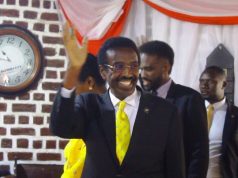
The Forum for Democratic Change (FDC) party is facing a leadership crisis as it prepares for its national delegates conference to elect a new National Executive Committee (NEC). The party is divided into two factions: the Katonga faction, led by Erias Lukwago, and the Najjanankumbi faction, still under the leadership of Patrick Amuriat as party president.
The Katonga faction has boycotted the electoral process organized by the Najjanankumbi faction, arguing that internal disputes within the party should be resolved before conducting elections. Despite a court order against it, the Katonga faction held an extraordinary delegates’ conference last week and elected Lukwago as interim party president, temporarily suspending the leadership of Amuriat and Secretary General Nathan Nandala Mafabi.
The Najjanankumbi faction is proceeding with the NEC elections as planned. The party’s Electoral Commission, chaired by Boniface Bamwenda Toterebuka, has announced a campaign roadmap and announced that 79 candidates have successfully secured nominations to compete for 51 available positions. Campaigning officially commenced yesterday and is scheduled to conclude on October 4, just before the elections on October 6.

The battle for the party’s top position has attracted two candidates, including Amuriat and former youth league leader Moses Mugisha. Several other individuals are competing for various positions, including Yusuf Nsibambi and Margaret Madanda for deputy party president of the Central Region, and Kaps Fungaroo for deputy president of the Northern Region. Mafabi is running unopposed for his secretary-general position, and Judith Akello and Geoffrey Ekanya are vying for the treasurer general position.
The outcome of the NEC elections is uncertain, but the divisions within the FDC party have cast doubt on its ability to mount a credible challenge to the ruling National Resistance Movement (NRM) party in the upcoming 2026 general elections.
Analysis
The FDC party is facing its biggest existential crisis since its formation in 2004. The party is divided into two factions, each claiming to be the legitimate leadership. The Katonga faction is aligned with former party president Kizza Besigye, while the Najjanankumbi faction is led by incumbent party president Patrick Amuriat.
The divisions within the FDC party have been exacerbated by allegations of corruption and mismanagement against Amuriat and Mafabi. In 2021, Besigye accused Amuriat and Mafabi of receiving illicit funding from suspicious sources to fund the party’s 2021 presidential campaign. The allegations were never substantiated, but they have further damaged the FDC party’s reputation and credibility.
The FDC party is now at a crossroads. If the two factions fail to reconcile, the party is likely to split, which would be a major blow to the opposition movement in Uganda. The ruling NRM party would be the biggest beneficiary of a split FDC party.
However, if the two factions are able to reconcile and unite behind a common goal, the FDC party could still emerge from this crisis stronger than before. The party has a strong grassroots base and a long history of mobilizing Ugandans against the NRM government.
The outcome of the FDC party’s NEC elections will be crucial for the party’s future. If Amuriat is re-elected as party president, it will be a sign that the party is prepared to move on from the recent divisions. However, if Mugisha is elected party president, it could lead to a further split within the party.
The FDC party has a difficult road ahead, but it is not too late for the party to reunite and become a viable alternative to the NRM party. The party’s leaders need to put aside their differences and focus on the common goal of defeating the NRM government in the 2026 general elections.